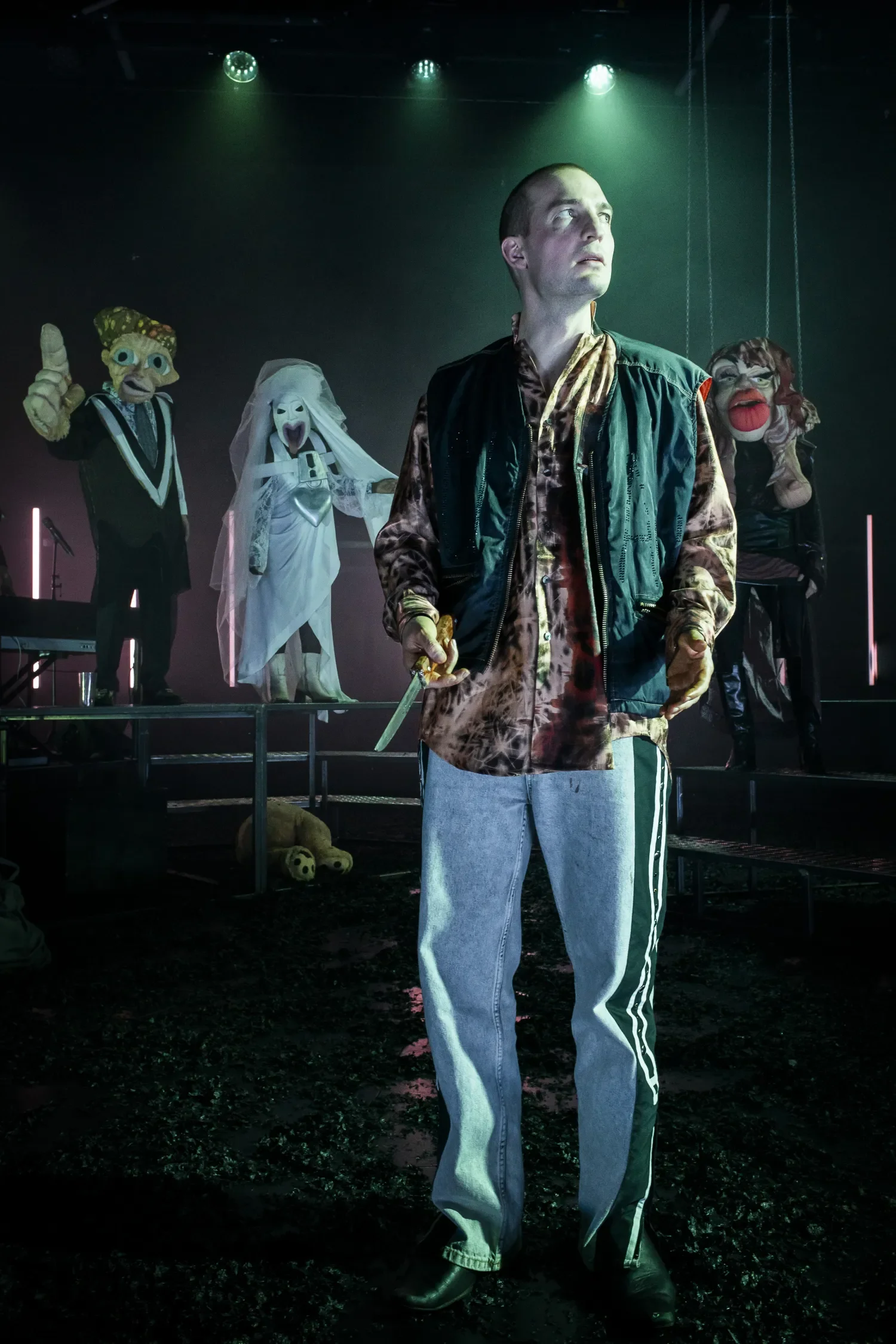
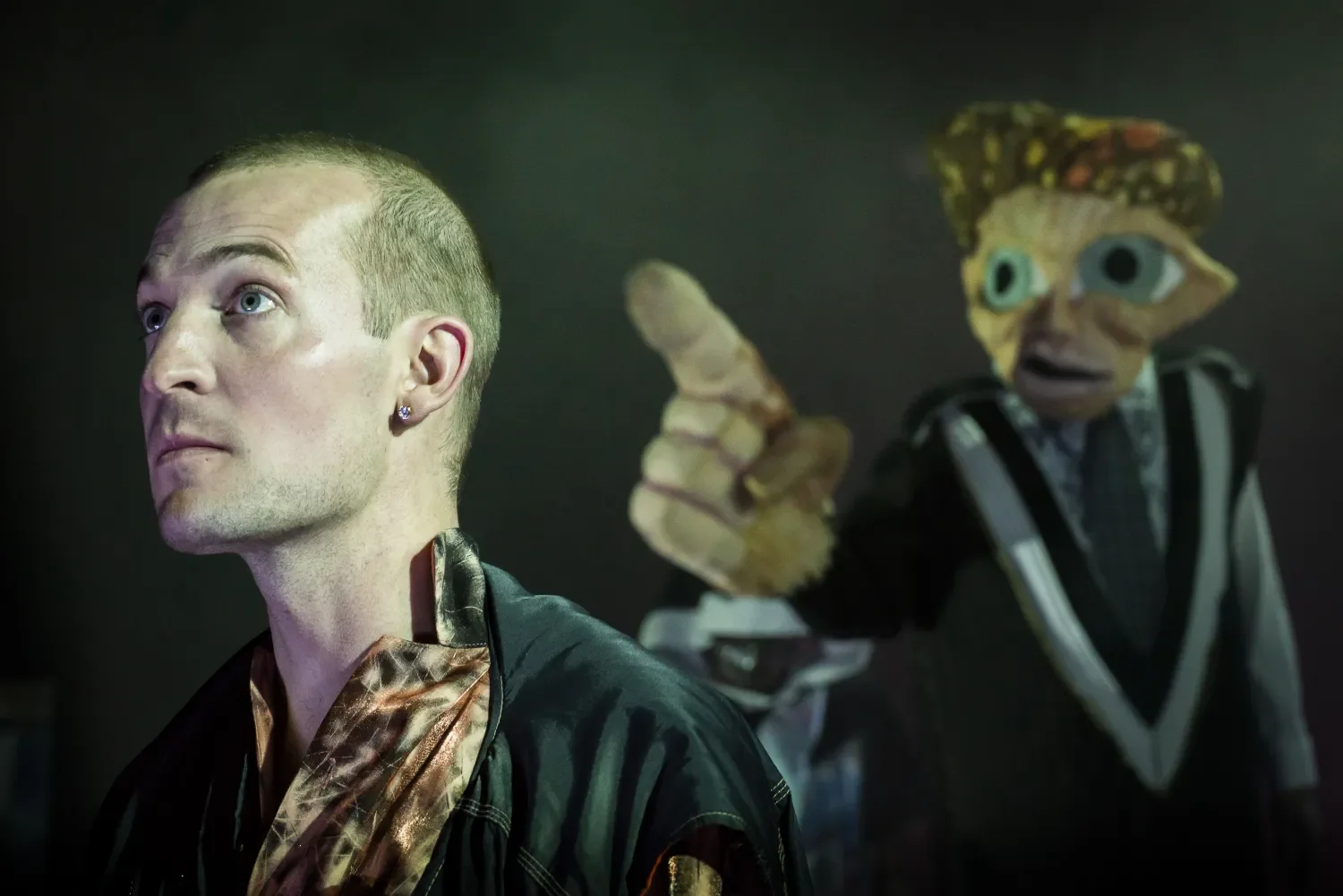
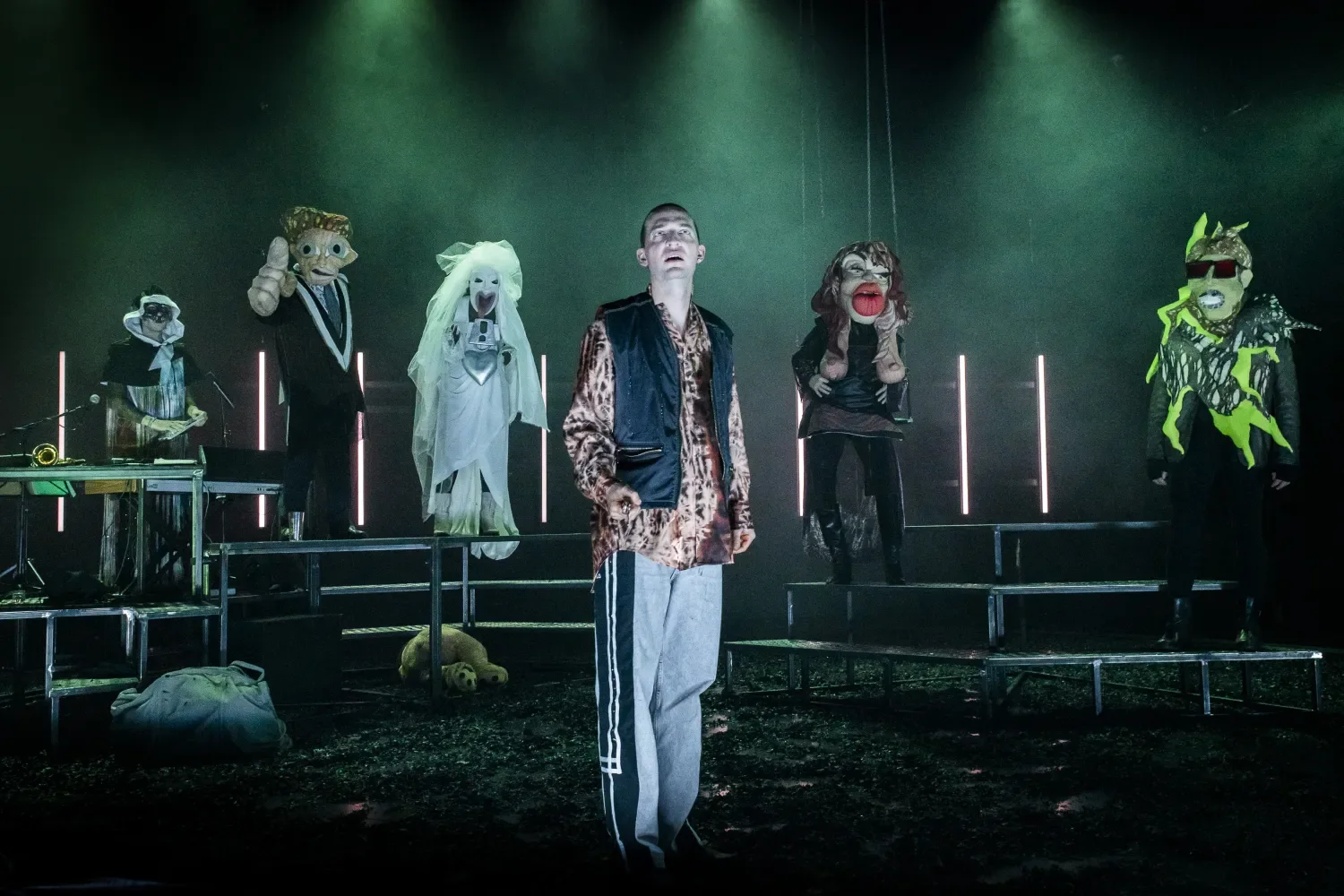
Liliom, a well-known barker at the fairground and an expert in the art of illusion for the masses, meets Julie, a maid, at the carousel and thus embarks on a fateful love affair. Driven by their longing for a life free from exploitation, they both immediately risk their jobs. Unemployed, however, Liliom feels increasingly humiliated by his social status. He finds no words for his shame; instead, he lashes out, and these blows strike Julie. When she becomes pregnant, the growing family's financial hardship intensifies, leading Liliom to allow himself to be persuaded by his friend to participate in a robbery. The robbery fails, and Liliom stabs himself to escape disgrace and punishment. In the afterlife, however, a court awaits him, granting him a second chance on Earth after sixteen years in purgatory. Can humans change?

The award-winning German-Hungarian author Terézia Mora has created a new translation of the Hungarian playwright's most famous work from 1909. Director Christina Tscharyiski focuses on a society in which people, like shooting gallery targets, are at the mercy of the violent carousel of social inequality and simultaneously reproduce it.