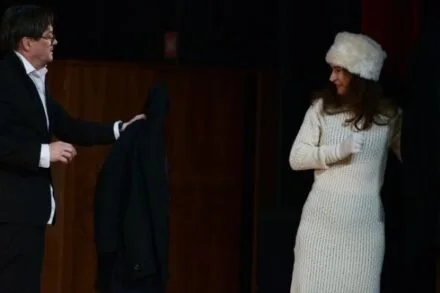
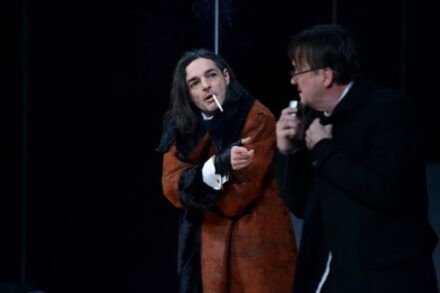
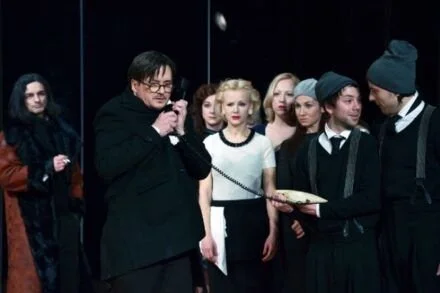
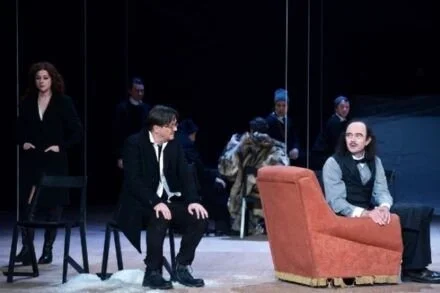
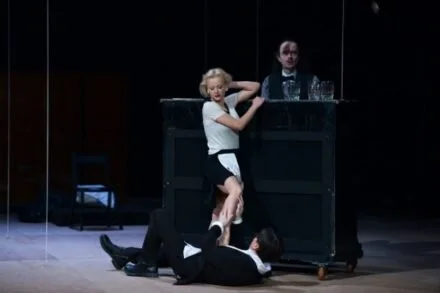
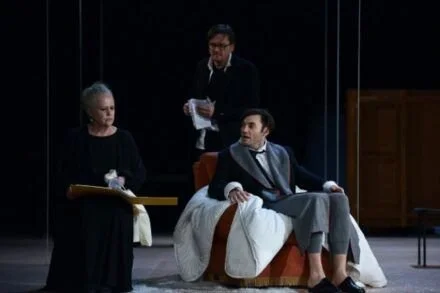
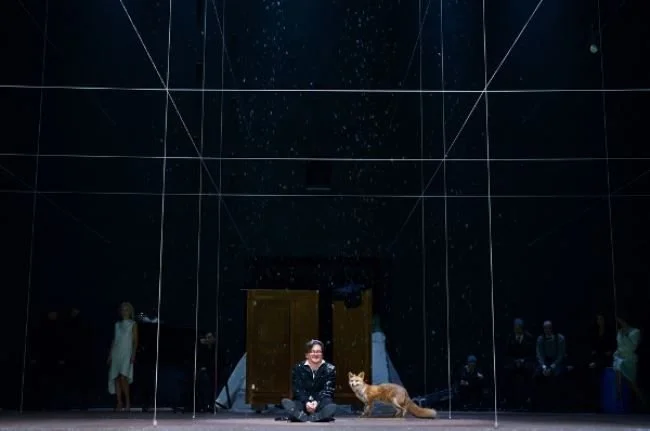
Franz Kafka! It is the writer’s name itself that triggers a wealth of associations matched by few authors of world literature. Furthermore, his name has become synonymous for a diversity of emotional states and conditions of modern humankind. His books are no easy reads and may require some effort to fully appreciate them. Although published a while ago, they remain perennially topical and part and parcel of our everyday culture and constantly elicit new interpretations. The Castle (written in 1922 and published in 1926) occupies a special position in Kafka’s relatively small body of work. The unfinished novel which offers a multiplicity of meaning is permeated by an ingenuous dark atmosphere and tells a story of a land surveyor who comes to a snowed in village at the foot of a castle. Ever since its publication The Castle has been a source of identification for different historical situations, political and metaphysical contexts. This goes to show what an impossible (if not entirely unreasonable) task it is to comprehend it in its totality. Every attempt to render it in a different medium is doomed to be inadequate. What remains therefore is to engage with it in a partial, personal, and almost selfish enquiry, sustained by Kafka’s metaphors, which will allow for a reflection of our present moment. The hazardous journey of authorial interpretation has been undertaken by the director Janusz Kica and Goran Ferčec, the author of the stage adaptation. As a follow-up to Kica’s staging of America (1995) and The Trial (2001) The Castle imparts the Slovenian audience one of the paths to reach the writer that is grasped by everyone, but by no one exhaustively.